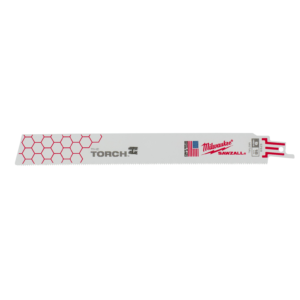
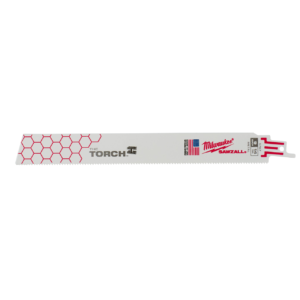
Reciprocating Saw Blades for Wood, Metal, Demolition, and Masonry
Reciprocating saw blades, commonly referred to as Sawzall blades, are essential for demolition, renovation, framing, mechanical work, and material removal where aggressive cutting and reach are required. Blade selection directly impacts cutting speed, finish quality, durability, and safety across wood, metal, masonry, and specialty applications.
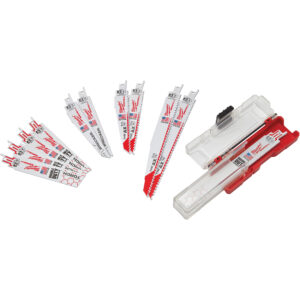
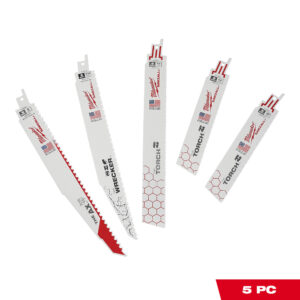
Our selection includes reciprocating saw blades from DEWALT, Milwaukee, Makita, and Diablo, available individually, in packs, and in bulk. Options include wood cutting, wood with nails and demolition blades, thin and thick metal cutting blades, masonry blades, pruning blades, meat cutting blades, and material removal scraper attachments.
Wood and Demolition Blades
Wood cutting and demolition blades are designed for aggressive material removal in framing and renovation work.
Low TPI blades cut lumber quickly.
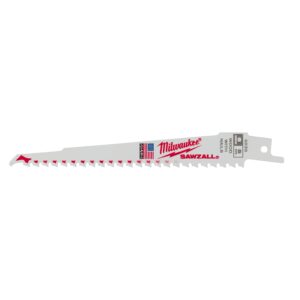
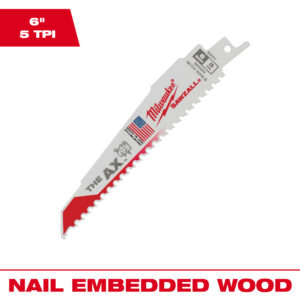
Wood-with-nails blades are engineered for embedded fasteners.
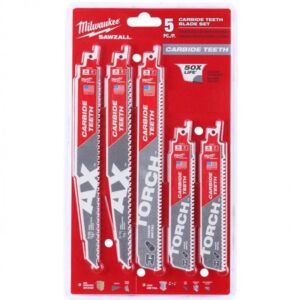
Carbide demolition blades improve longevity in heavy tear-out applications.
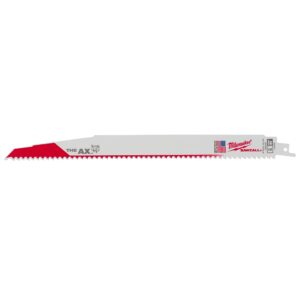
Longer blades provide reach for plunge cuts and structural demolition.
Matching tooth pattern to material improves cutting efficiency and reduces vibration.
Metal Cutting Blades
Metal cutting blades are designed for steel, pipe, conduit, and structural components.
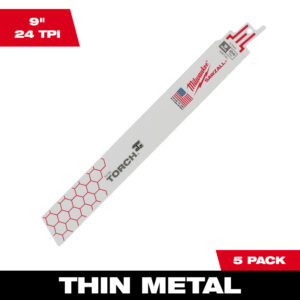
Higher TPI blades support clean cuts in thin metal.
Lower TPI blades handle thicker steel sections.
Bi-metal construction improves flexibility and break resistance.
Carbide and advanced alloys extend life in hardened materials.
Proper blade selection reduces overheating and premature dulling.
Masonry and Specialty Blades
Specialty blades expand cutting capability beyond wood and metal.
Carbide-grit blades support masonry and abrasive materials.
Pruning blades handle green wood and landscaping applications.
Meat cutting blades support processing and specialty use.
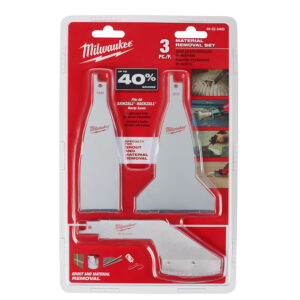
Scraper blades assist with adhesive and material removal.
Selecting the correct blade prevents binding and improves control.
Blade Length, TPI, and Material Selection
Blade performance depends on length, tooth count, and material construction.
Higher TPI (18–24) provides cleaner cuts in thinner materials.
Lower TPI (6–10) improves speed in thicker or demolition applications.
Blade length should extend beyond material thickness for full stroke efficiency.
Bi-metal blades balance flexibility and durability.
Carbide blades maximize life in extreme conditions.
Using the correct blade improves cut quality and extends tool life.
Built for Demolition and High-Load Cutting
Reciprocating saw blades operate under heavy vibration, lateral stress, and high impact load. Professional-grade blade bodies and hardened cutting edges improve durability, reduce breakage, and maintain consistent cutting performance across demanding jobsite conditions.
Routine blade replacement improves safety and cutting speed.
How Reciprocating Saw Blades Support Jobsite Workflows
Reciprocating blades are used alongside demolition saws, framing tools, mechanical installation equipment, and renovation systems. Proper blade selection improves tear-out speed, pipe cutting efficiency, and material removal control.
Located in Woodstock just minutes from Highway 401, Contractor Cave supports contractors across Southern Ontario with convenient pickup for demolition blades, metal cutting blades, and specialty Sawzall accessories.
Reciprocating Saw Blade FAQ
What is the difference between high TPI and low TPI blades?
High TPI blades provide cleaner cuts in thin materials, while low TPI blades cut faster in thick wood or demolition applications.
Can I cut metal with a wood blade?
No. Wood blades will dull quickly or break when used on metal. Always match blade type to material.
What are bi-metal blades?
Bi-metal blades combine flexible steel bodies with hardened cutting teeth, improving durability and resistance to breakage.
When should I use a carbide blade?
Carbide blades are best for heavy demolition, nail-embedded wood, hardened metals, and abrasive materials where extended blade life is required.
Why does blade length matter?
Blade length should exceed material thickness to allow full stroke movement and reduce binding.