Lasers and Laser Accessories for Layout, Grading, and Precision Alignment
Lasers support layout, elevation control, grading, framing, and installation work where measurable accuracy directly impacts jobsite performance. From rotary lasers to red and green line lasers, these tools allow contractors to establish level reference lines, transfer elevation points, and maintain consistent alignment across large and small projects.
Our selection includes professional brands such as Spectra, Stabila, DEWALT, and Milwaukee, along with essential laser accessories including grade rods, rod clamps, receivers, remotes, brackets, rechargeable batteries, and laser tripods.
Types of Lasers and Their Uses
Different laser systems support different jobsite requirements.
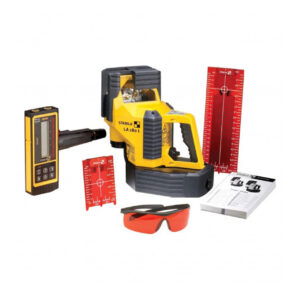
Rotary lasers provide 360-degree level reference for grading, foundation layout, concrete work, and large-scale construction.
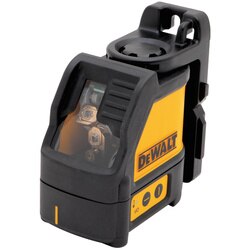
Red line lasers support interior layout, framing, and installation work.
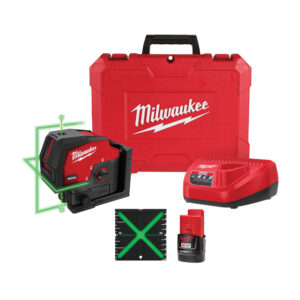
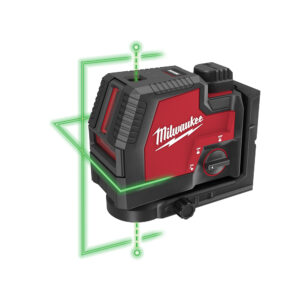
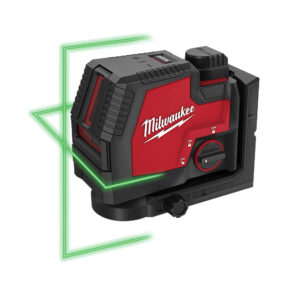
Green line lasers offer improved visibility in brighter environments.
Multi-line and cross-line lasers assist with tile, cabinetry, mechanical, and finish installation.
Using the correct laser improves speed, accuracy, and layout consistency.
Laser Accessories That Extend Capability
Laser performance depends heavily on supporting equipment.
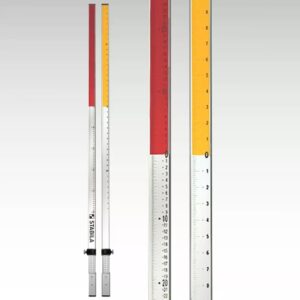
Grade rods allow elevation measurement over distance.
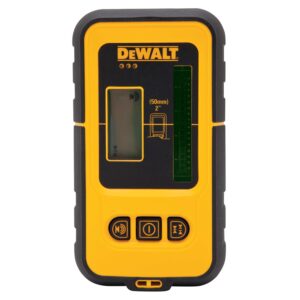
Laser receivers improve visibility outdoors or in bright light.
Rod clamps and brackets support mounting flexibility.
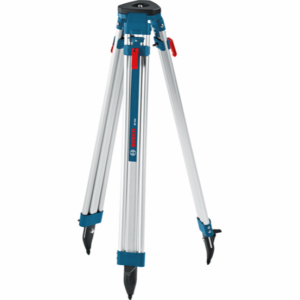
Laser tripods provide stable positioning on uneven ground.
Rechargeable batteries ensure consistent runtime on long workdays.
Remotes allow adjustments without repositioning the unit.
Keeping compatible accessories on hand improves workflow efficiency.
Choosing the Right Laser System
Selecting a laser depends on job scale, environment, and required precision.
Working range affects suitability for exterior grading.
Beam visibility influences indoor and outdoor usability.
Accuracy ratings determine tolerance performance.
Durability matters in abrasive or high-vibration environments.
Maintaining calibrated and properly mounted lasers helps reduce layout errors and rework.
Built for Professional Accuracy
Laser systems must perform reliably across temperature changes, dust exposure, vibration, and extended runtime. Professional models provide reinforced housings, sealed electronics, and consistent calibration to support repeatable measurements across demanding construction projects.
Because layout errors can compound quickly, contractors prioritize durable, accurate systems from trusted brands.
How Laser Systems Connect to Other Jobsite Supplies
Lasers are commonly used alongside levels, measuring tools, concrete equipment, layout accessories, anchors, fasteners, and installation tools across framing, concrete, mechanical, and finishing trades. Contractors frequently source lasers and accessories together to support full layout workflows.
Lasers FAQ
What is the difference between rotary lasers and line lasers?
Rotary lasers project a 360-degree reference plane for large-scale grading and exterior layout, while line lasers project fixed lines for interior alignment and installation work. Rotary models are typically used for foundations and concrete, while line lasers are common in framing and finish work.
When should I use a green laser instead of red?
Green lasers provide improved visibility in brighter environments and over longer distances indoors. Red lasers are often sufficient for standard interior layout. Visibility needs depend on lighting conditions and range.
What does a laser receiver do?
Laser receivers detect the beam outdoors or in bright conditions where the beam may not be visible. They extend the working range of rotary lasers. Receivers are essential for grading and elevation work.
Why are grade rods used with rotary lasers?
Grade rods measure elevation changes relative to the laser reference plane. They allow contractors to verify depth and slope. This is critical for concrete, excavation, and grading projects.
How often should lasers be calibrated?
Calibration frequency depends on usage and manufacturer guidelines. Drops, impacts, or vibration can affect accuracy. Regular verification helps maintain precision.