Sockets and Socket Sets for Automotive, Fleet, and Industrial Service
Sockets and socket sets support fastening and removal tasks across automotive repair, heavy equipment service, fleet maintenance, farm equipment repair, and industrial applications where torque accuracy and durability matter. From chrome sockets to impact-rated sockets, shallow and deep configurations, and complete drive-size systems, the right setup ensures efficient, repeatable performance under load.
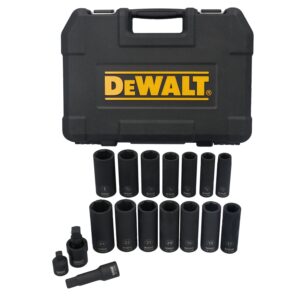
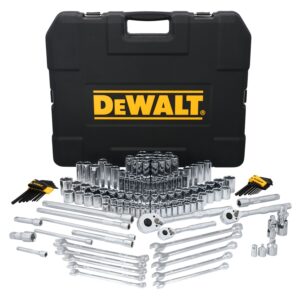
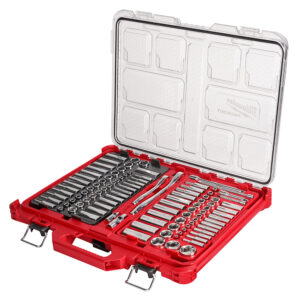
Our selection includes individual sockets and complete socket sets in 1/4″, 3/8″, 1/2″, 3/4″, and 1″ drive sizes, along with hex sockets, Torx sockets, 6-point sockets, extensions, adapters, ratchets, flex handles, and universal joints. Brands include Gray/Dynamic, GearWrench, DEWALT, and Milwaukee, including sets packaged in Packout cases.
Types of Sockets and Their Uses
Different socket types support different service environments.
Chrome sockets are commonly used for general automotive and shop applications.
Impact sockets are designed for use with impact wrenches in high-torque environments.
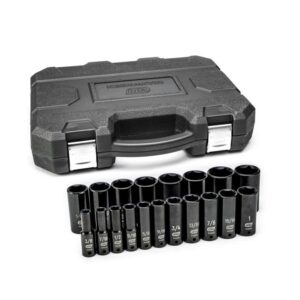
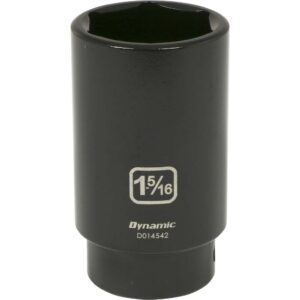
Deep sockets allow access to longer fasteners and studs.
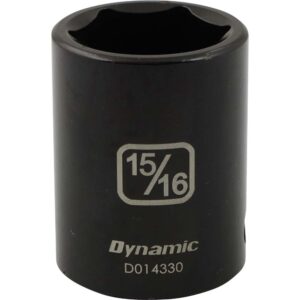
Shallow sockets improve access in tight spaces.
6-point sockets provide stronger engagement on fasteners under load.
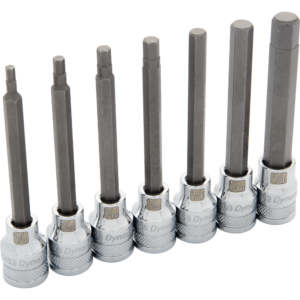
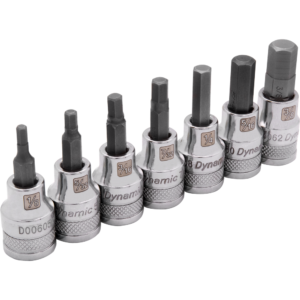
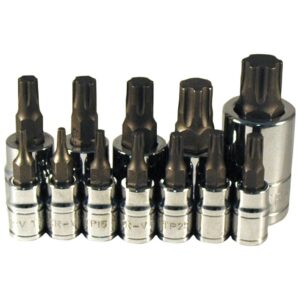
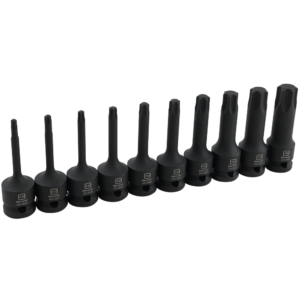
Hex and Torx sockets support specialty fasteners in mechanical and industrial work.
Using the correct socket reduces fastener rounding and improves torque transfer.
Drive Sizes and System Compatibility
Drive size selection depends on torque requirements and fastener size.
1/4″ drive supports light-duty and detail work.
3/8″ drive is common for automotive repair.
1/2″ drive handles higher torque applications.
3/4″ and 1″ drive systems are used for heavy equipment, truck, and industrial service.
Maintaining consistent drive systems across ratchets, extensions, adapters, and accessories improves workflow efficiency.
Socket Accessories That Improve Access and Control
Supporting tools extend socket system capability.
Ratchets provide controlled manual torque.
Flex handles and breaker bars assist with stubborn fasteners.
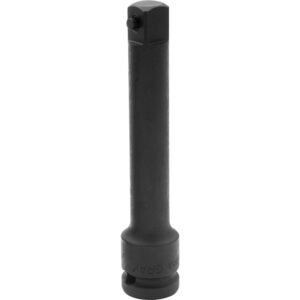
Extensions increase reach in recessed areas.
Universal joints improve angle access.
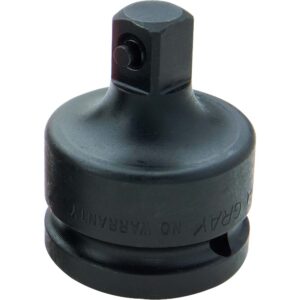
Adapters allow cross-drive compatibility.
A complete system reduces downtime during repair work.
Built for Professional Service Environments
Sockets experience repeated torque cycles, impact stress, and exposure to oil, debris, and shop conditions. Professional-grade construction maintains dimensional accuracy and durability over time.
Impact sockets are specifically engineered to withstand torsional shock without cracking, while chrome sockets prioritize precise fit and corrosion resistance.
How Socket Systems Connect to Other Shop Tools
Sockets are commonly used alongside impact wrenches, torque wrenches, breaker bars, pliers, cutting tools, and diagnostic equipment across automotive and industrial repair environments. Contractors and technicians often build complete tool systems around drive-size compatibility.
Sockets FAQ
What is the difference between chrome and impact sockets?
Chrome sockets are designed for manual or light-duty use, while impact sockets are built to withstand high-torque impact wrench use. Impact sockets are typically thicker and engineered for shock resistance. Using the correct type prevents tool damage.
When should I use deep sockets?
Deep sockets are used when fasteners extend past the nut or when working on studs. They provide clearance that shallow sockets cannot. They are common in automotive and mechanical repair.
Why are 6-point sockets preferred?
6-point sockets provide stronger fastener engagement and reduce the risk of rounding under high torque. They are commonly used in professional environments. 12-point sockets offer more angle access but less contact area.
What drive size should I choose?
Drive size depends on torque needs and fastener size. 3/8″ and 1/2″ are most common in automotive work, while 3/4″ and 1″ are used in heavy equipment and industrial applications.
Can I use adapters between drive sizes?
Adapters allow cross-drive compatibility but may reduce torque efficiency in high-load situations. Proper drive-size selection is recommended for heavy-duty work.