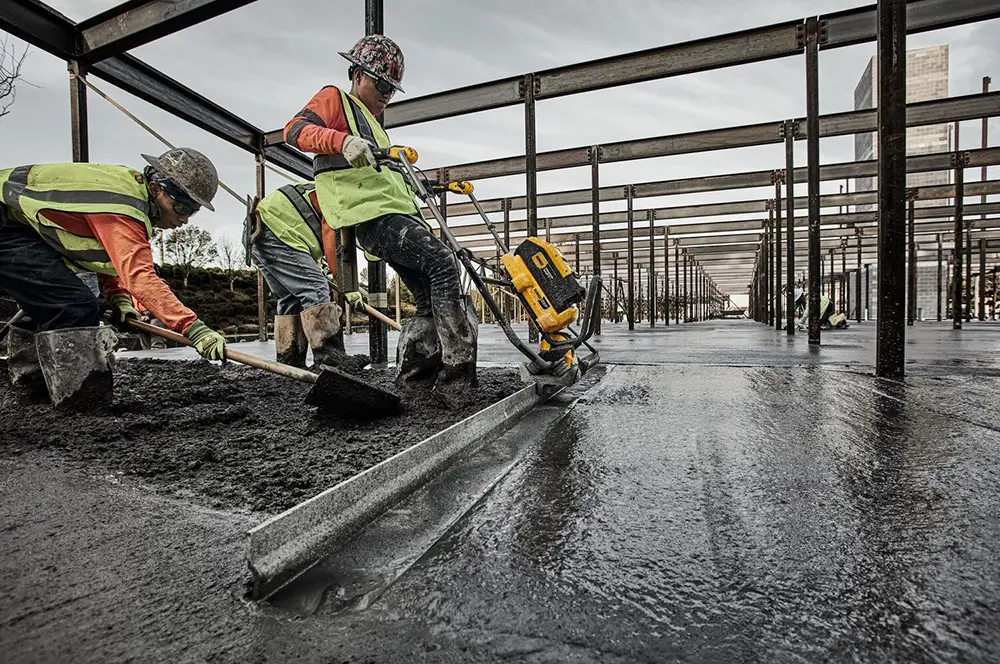
Getting concrete flat, level, and ready for finishing is one of the biggest labour bottlenecks on any pour. Whether you’re pouring garage slabs, shop floors, or agricultural buildings, screeding speed directly impacts crew size, finish quality, and how quickly you can move to finishing.
The shift from manual screeding to powered screeding is one of the fastest ways contractors are reducing labour while increasing production.
Manual Screed vs Power Screed (What Actually Changes)
Manual Screeding
- Requires 2-3 workers consistently
- Slower on larger pours
- Fatigue affects finish quality
- Harder to maintain level across long runs
Power Screeding
- Often 1-2 workers
- Faster consolidation and leveling
- More consistent finish across the slab
- Handles stiff mixes and cold joints better
This is where modern vibratory and cordless screed systems change the entire workflow.
What Faster Screeding Actually Means on the Job
Faster screeding is not just speed. It is:
- Maintaining consistent grade across the slab
- Reducing crew size without sacrificing quality
- Covering more square footage per hour
- Minimizing rework before finishing
This is where most crews gain back real time and profit on every pour.
Why Contractors Are Switching to Power Screeds
Labour Reduction
- Cutting from 3 workers down to 1-2 on the screed is one of the biggest gains on any crew
Higher Vibration Means Better Consolidation
Modern screeds deliver high vibration output (VPM), which helps:
- Settle aggregate faster
- Eliminate air pockets
- Improve surface consistency
- Reduce finishing time
No Cords, No Gas (Cordless Systems)
Cordless systems eliminate:
- Generator setup
- Fuel handling
- Pull starts and maintenance
- Trip hazards
This is especially valuable for indoor pours, barns, shops, and tight-access jobs.
Concrete Screed Systems Contractors Are Using Right Now
Milwaukee MX FUEL Vibratory Screed (MXF381-2CP)
Best for:
- Medium to large pours
- High production environments
- Crews standardizing on MX FUEL
Key advantage:
- Consistent power and runtime for continuous screeding without slowdown
DEWALT POWERSHIFT Concrete Power Screed (DCPS330AG2)
Best for:
- Medium to large pours
- Crews already running DEWALT battery platforms
- Jobs requiring strong control and maneuverability
Key advantage:
- High vibration output (up to 7,800 VPM) for stiff mixes and controlled finishing
Husqvarna BV30 Screed Power Unit (967856301)
Best for:
- Crews running gas-powered systems
- Jobs requiring interchangeable screed lengths
- Contractors sticking with traditional setups
Key advantage:
- Proven modular system with flexible board options
Which Screed Should You Choose
Typical Crew Setup Before vs After Switching to a Power Screed
Manual screeding setup:
- 2-3 workers pulling and leveling
- Slower progress across the slab
- More fatigue as the pour continues
- Higher chance of low or high spots requiring rework
Power screed setup:
- 1 operator running the screed
- 1 support worker if needed
- Faster coverage and consistent passes
- Reduced rework before finishing
This is where most crews see immediate gains in both speed and labour cost on the same job.
Typical Jobs That Benefit Most
- Garage slabs and shop floors
- Agricultural buildings and barns
- Sidewalks and curbs
- Small to mid-size commercial pours
- Cold joints and repair work
What Actually Matters When Choosing a Concrete Screed
Vibration Output (VPM)
- Higher VPM improves consolidation and finish quality
Board Compatibility
- Ensure it fits your preferred screed boards
Runtime
- Critical for larger pours and continuous operation
Ergonomics
- Adjustable handles reduce fatigue and improve control
Fastest Way to Improve Productivity on Concrete Jobs
If your crew is still manually screeding, upgrading to a power screed is one of the fastest ways to:
- Reduce labour requirements
- Increase daily output
- Improve slab consistency
- Reduce rework and finishing time
This is not just a tool upgrade. It is a production upgrade.
FAQ
How many workers do you need to screed concrete?
Manual screeding typically requires 2-3 workers to maintain grade and move the board. With a power screed, most crews can reduce that to 1-2 workers while increasing speed and consistency.
Is a power screed worth it for small jobs?
For very small pours, manual screeding can still make sense. However, once pours become consistent or larger, upgrading to a power screed quickly pays off through reduced labour and faster completion times.
What is the difference between cordless and gas concrete screeds?
Cordless screeds like the Milwaukee MX FUEL Vibratory Screed (MXF381-2CP) and DEWALT POWERSHIFT Concrete Power Screed (DCPS330AG2) eliminate fuel, noise, and maintenance while providing consistent vibration. Gas screeds like the Husqvarna BV30 Screed Power Unit (967856301) are still used for modular setups but require more upkeep and jobsite management.